
European retailers and consumers face a fundamental choice when selecting bedroom storage: hinged or sliding wardrobes. This paper provides a practical selection guide based on spatial constraints, usage patterns, and market demand. Foshan Homefeel Furniture Limited (established 2009) manufactures both configurations from Medium Density Fibreboard (MDF) with E0/E1 grade certification. The analysis compares floor space requirements (hinged needs 500mm swing clearance; sliding requires none), interior accessibility (hinged allows full simultaneous access; sliding offers one section at a time), mirror integration options, hardware durability, and price positioning. A decision matrix helps European buyers match wardrobe type to housing typologies – period properties versus new‑build apartments. The guide concludes that sliding wardrobes dominate compact UK and Dutch flats, while hinged wardrobes remain preferred in German and Swiss spacious bedrooms.
Introduction
European furniture retailers frequently ask which wardrobe configuration generates higher sales. The answer depends on housing stock. This guide compares hinged wardrobes and sliding wardrobes manufactured by Foshan Homefeel Furniture Limited, helping European buyers choose the right product mix.
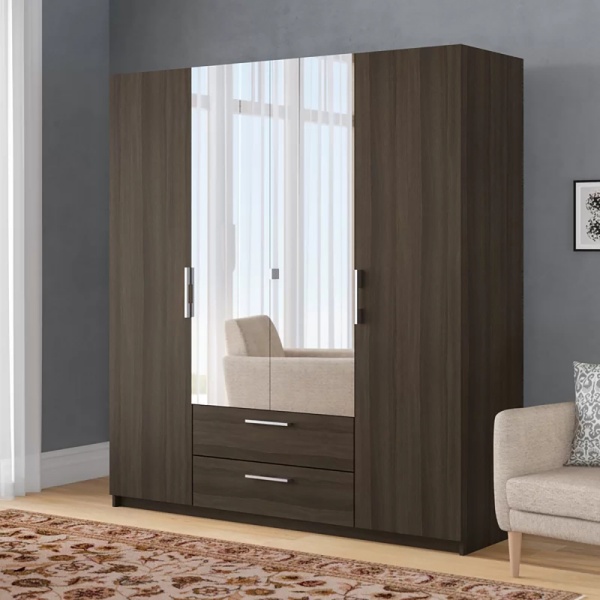
Hinged Wardrobes: Traditional Access for Generous Spaces
Hinged wardrobes have doors attached by side‑mounted hinges. They require 500mm of swing clearance in front. Advantages include full interior visibility when both doors open, lower manufacturing cost, easier hinge replacement, and full‑length mirrors on door faces.
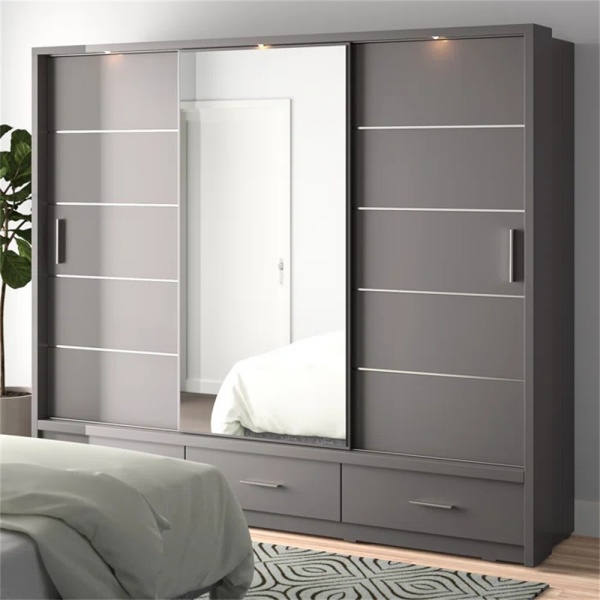
Sliding Wardrobes: Space Optimisation for Compact Homes
Sliding wardrobes (bypass doors) glide horizontally on tracks. No swing clearance is needed. Advantages include fitting into alcoves and narrow walls, allowing bedside tables placed close, three‑door or four‑door options for wide spans, and mirrors on selected panels. Disadvantages: only one section accessible at a time, tracks require cleaning.
Technical Specifications and Compliance
Both configurations use E1/E0 grade MDF with low‑VOC finishes. Hinges are soft‑closing (10,000‑cycle tested). Sliding mechanisms use ball‑bearing rollers on aluminium tracks (50,000 cycles). Mirror integration is available on both types. All wardrobes comply with REACH (August 2026 formaldehyde limit of 0.062 mg/m³) and EN 16122 stability standards.
Decision Matrix for European Importers
| Factor | Hinged | Sliding |
|---|---|---|
| Min bedroom width | 2.2m | 1.6m |
| Swing clearance needed | 500mm | None |
| Price point | Lower | Medium‑higher |
| Mirror options | Full‑door | Partial or full |
| Best markets | DE, CH, FR | UK, NL, ES |
European retailers should stock both, but adjust ratios. In the UK, sliding wardrobes represent 65% of sales. In Germany, hinged holds 55%.
Conclusion
Foshan Homefeel Furniture Limited provides both hinged and sliding MDF wardrobes tailored to European housing diversity. Understanding local space constraints allows importers to curate the right product mix. The company also offers matching shoe cabinets, TV stands, and drawer cabinets for complete home furnishing ranges.
Post time: Jun-12-2026