
European B2B buyers—importers, retailers, and property developers—face a recurring challenge when sourcing living room furniture: shoe cabinets, TV stands, and chests of drawers that look correct in a catalogue but fail once they arrive in a real European hallway or living room. Sizing errors are the leading cause of returns in this category. This paper examines three cabinet types from HOMEFEEL FURNITURE LIMITED, a Foshan-based manufacturer established in 2009. The analysis covers selection criteria by European room type, product specifications, material compliance (E1 boards), and logistics for European B2B buyers.
1. Introduction
Living room furniture fails on fit more often than on quality. A shoe cabinet that leaves less than 90cm of walkway makes a hallway feel like an obstruction every day. A TV stand narrower than the screen creates a tipping risk. A chest of drawers 50cm deep turns a small bedroom into a sideways shuffle. For B2B buyers, these are not aesthetic problems—they are return rates, negative reviews, and lost retail accounts. This paper examines three cabinet types from HOMEFEEL FURNITURE LIMITED and the dimensions that determine whether they work in European homes.
2. Three Cabinet Types for European Living Rooms
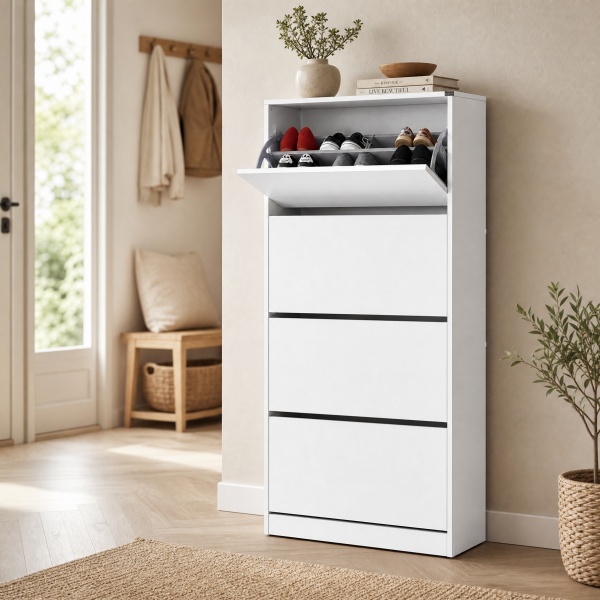
Slim Shoe Cabinet for Narrow Entryways (HF-ST011)
Most British hallways are 90cm to 120cm wide. A shoe cabinet deeper than 25cm begins to compromise the walkway. This model measures just 19cm in depth, with a flip-down door mechanism that stores shoes without occupying floor space. It fits beside a front door without blocking the door swing—a measurement buyers frequently forget until installation day. The shallow profile suits the narrow entryways typical of urban apartments across the UK, Netherlands, and Germany.
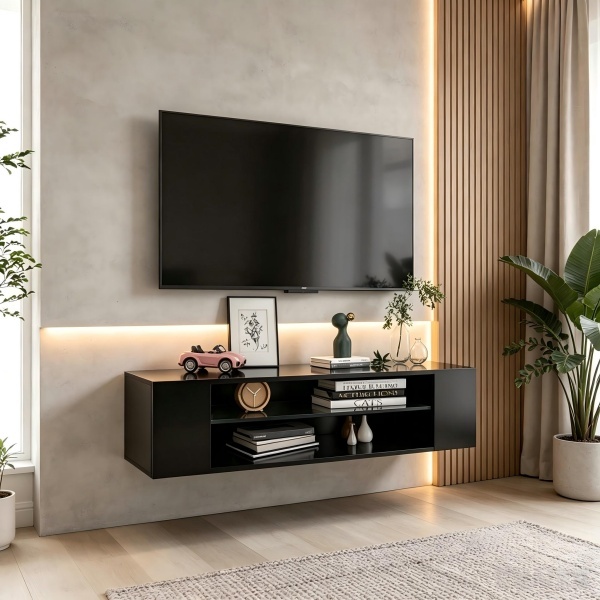
Low TV Stand for Compact Living Rooms (HF-TT045)
European TV stands should be wider than the screen by at least 20cm overall to reduce tipping risk and create visual balance. This 120cm wide unit supports screens up to 50 inches, keeping the proportion correct for smaller living rooms. Its 35cm depth suits long narrow rooms where every centimetre of walkway matters. The low 40cm height positions the screen near seated eye level, avoiding the neck strain that higher stands cause in compact spaces.
Narrow Chest of Drawers for Small Bedrooms (HF-TC034)
Standard chests are 45cm to 50cm deep. In a box room or new-build flat, that depth is the difference between comfortable movement and turning sideways to pass. This unit measures 38cm deep and 50cm wide—narrow enough for a chimney breast alcove or the gap beside a wardrobe. Three drawers with metal slides provide storage without the footprint of a wider chest. The E1 particle board construction meets EU indoor air quality standards.
3. Selection Points by European Room Type
For urban apartments under 50m², depth is the first specification to check—not width. For Victorian terraces in the UK, measure the alcove beside the chimney breast before selecting a chest, as recesses are often 50cm to 70cm wide. For open-plan living areas, TV stands should not exceed three-quarters of the available wall length, or the room begins to feel like a corridor.
4. Material and Logistics for European B2B Buyers
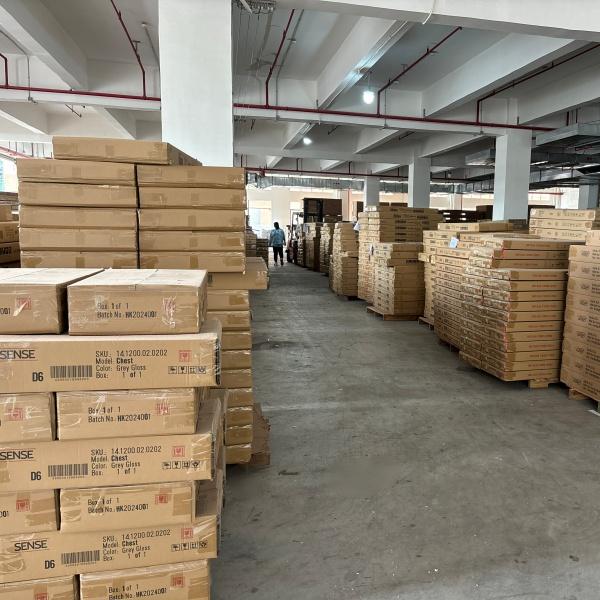
All three models use E1-grade manufactured wood. Flat-pack shipping maximises container utilisation, and OEM/ODM services with MOQs starting at 50 pieces allow importers to test fit before committing to full container loads.
5. Conclusion
HOMEFEEL FURNITURE LIMITED offers shoe cabinets, TV stands, and chests of drawers sized to the dimensions that actually matter in European homes—hallway depth, screen proportion, and bedroom floor space. For importers seeking compliant, flat-pack living room furniture that fits rather than frustrates, the range presents a practical sourcing option.
Post time: Oct-16-2026