
1. The Constraint Catalogues Hide
Sourcing problems in living room furniture seldom appear at the sample stage. They appear when a container is opened and the cabinet does not fit the hallway it was bought for.
⚠Depth is the usual culprit. A 40 cm chest that sells in a suburban house can block a corridor in a city flat. A stand built for a 55-inch screen looks undersized beside 75-inch panels.
Adding designs does not fix this. Specifying depth and screen size first does.
2. Three Purchase Points That Move Between Markets
Where halls run narrow, buyers should read depth before capacity. A 32 cm shoe cabinet still lets a person pass; a 40 cm one does not. Adjustable shelves then decide whether tall boots fit.
Wall-hung low boards free floor area in compact apartments, but they move load onto the wall. Confirm the substrate before specifying.
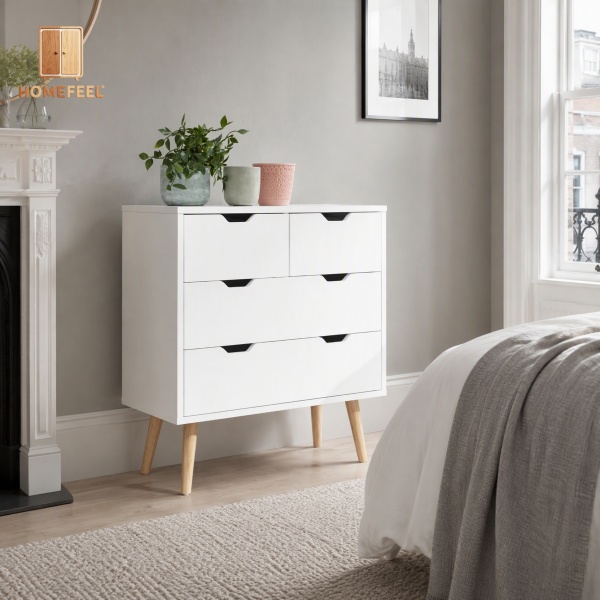
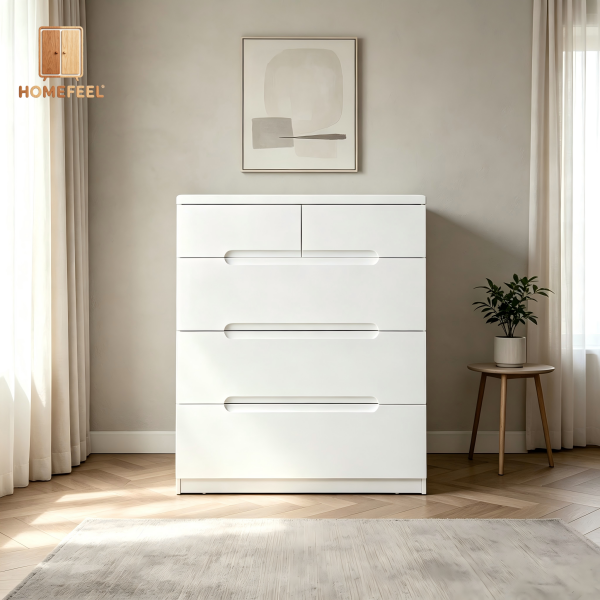
A five-drawer chest at 99 cm and a four-drawer chest at 69.5 cm solve different rooms. What each drawer carries matters more than how many there are.
3. Three Living Room Cabinet Formats From Our Showroom
HF-ST053: 100 cm high, 90 cm wide and 32 cm deep at 34.4 kg. Two closed cabinets hold three-position adjustable shelves; an open bottom shelf takes daily pairs. Capacity is 24 pairs, rated to UK 8.5.
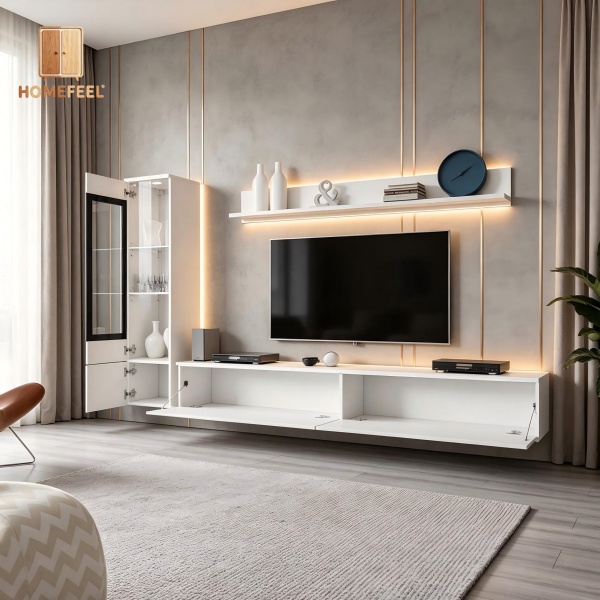
TV Stands: HF-TT042 (180 cm wide) takes screens up to 75 inches on an integrated swivel bracket. HF-TT045 is the apartment answer: a wall-mounted board 100 cm wide for screens up to 43 inches.
Chests: HF-TC005 (99 cm high, 5 drawers) with metal roller glides and 10 kg capacity per drawer. HF-TC008 (69.5 cm high, 4 drawers) features solid-wood drawers and cut-out pulls.
4. What This Means for Buyers
Specify depth and screen size first, then drawer count. A mixed container built around three depths rather than three designs fits more floor plans per cubic metre, and fewer units come back.
Post time: Oct-21-2026